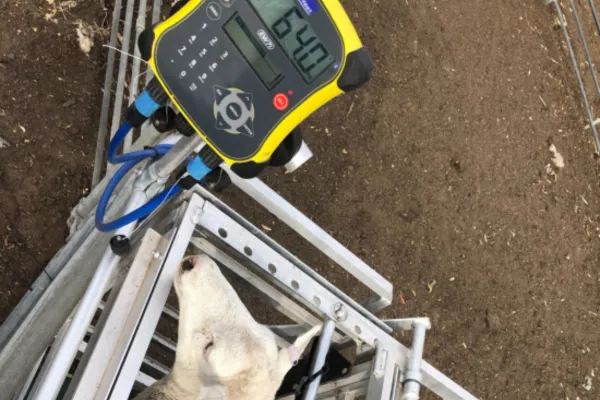
Precision Sheep Management
The Critical Control Point in Precision Sheep Management: Carrying ewe history through to the Lamb
We are currently helping with the development of a workshop series focused on precision sheep management. A large part of this program is about collecting information and using that information to make better decisions around feeding, reproduction, lamb survival, selection, culling and long-term flock structure.
But collecting information is only the first step.
The real value comes when that information can be carried forward and used at the next decision point. In a breeding flock, one of the most important control points is the transfer of information from the ewe to her lamb or lambs.
In an ideal world, every lamb would be linked directly to its individual dam and sire. We would know the full parentage, genetic history, birth status, rearing status, lambing performance and lifetime productivity of every animal in the system.
That is where the industry is heading towards sometime in the future, but we are not quite there yet for commercial flocks. That does not mean the information currently being collected has no value. In fact, there is a lot of useful information already sitting in the system, provided it is captured, retained and used properly.
A simple way to think about it is like the metadata collected when you use your phone. The phone company may know roughly where you were, what time the phone was used, how long a call went for and what tower the phone connected to. It does not know the content of the conversation, but the surrounding information still tells a story.
Sheep data works in a similar way.
When we pregnancy scan a ewe, we may know whether she was carrying a single, twins or triplets. If we get more serious with how we manage the information, we may also know whether she scanned early or late. If joining groups were recorded, we may even know which group of rams she was joined to. If ewes are split by age, we may also know whether the lamb came from maiden ewes, mature ewes or older ewes.
That still does not tell us the exact sire of the lamb. It may not tell us the individual mother. It may not tell us whether the lamb was actually reared as a single or a twin. But it does give us useful background information that can improve management and selection decisions.
The critical point is this: the information only has value if it is transferred to the lamb.
Why birth type and ewe history matter
At selection time, it is very easy to be biased by the physical appearance of the animal in front of us. When we are selecting replacement ewe lambs, the biggest, strongest and best-looking animals naturally catch the eye.
That is understandable, but it can also lead us in the wrong direction.
Birth type and age of dam are what we would call fixed effects. They influence the performance of the lamb, but they are not necessarily a reflection of the lamb’s genetic merit.
A single-born lamb will generally be heavier than a twin-born lamb, particularly early in life. It has had less competition before birth and usually more milk available after birth. Twin-born lambs are often lighter at marking and weaning, even though they may have the same or better genetic merit than a single-born lamb.
The same applies to age of dam. Lambs from mature ewes often have a different early-life advantage compared with lambs from maiden or younger ewes. That does not automatically make the lamb genetically better. It may simply reflect the environment it was born and raised in.
This is where selection can become biased.
If we simply select the biggest replacement ewe lambs without knowing their background, we may end up favouring single-born lambs from mature ewes. They look good on the day, but they may not be the animals that will deliver the greatest future value in a self-replacing flock.
A smaller twin-born ewe lamb may actually be the more valuable breeding animal, especially if the long-term objective is to improve reproductive performance and build a flock that can consistently produce and rear more lambs.
Without carrying birth status and ewe group information through to the lamb, that decision becomes less informed. We are selecting with incomplete information.
The practical point at lamb marking
This is where lamb marking becomes a critical control point.
If we want to transfer ewe information to the lamb, we need a practical way of linking the lambs being marked back to the ewe group they came from. For most commercial flocks, the simplest method is to record the range of EID tags applied to each lambing group.
This does require the lambing groups to be kept separate until marking. If single-bearing and twin-bearing ewes are managed separately from scanning through to lambing (which is recommended best practice), then their lambs can be identified as coming from either a single-bearing or twin-bearing ewe group at marking.
The process does not need to be complicated.
When a mob of lambs from a twin-bearing ewe group is brought in for marking, the first visual tag number associated with the EID tag is recorded. At the end of that mob, the last tag number is recorded. As long as tags are applied in sequence and not randomly pulled from different bags or buckets, that start and finish number gives you a record of which lambs came from that group.
For example:
Twin-bearing ewe group (2yo ewes - second lambers)
Start tag number: 2201
Finish tag number: 2480
That means lambs tagged between 2201 and 2480 can later be allocated as coming from the twin-bearing ewe group from the second lambers.
The same process can be used for single-bearing ewe groups, triplet-bearing ewe groups, ewe age groups, joining groups or sire groups, depending on how much detail has been planned and retained through the system.
There is a little bit of housekeeping required. Tags need to be applied in order. The start and finish numbers need to be written down accurately. The lambing groups need to stay separate until marking. But the actual process is relatively simple.
It is not high-tech. It is not expensive. It is not a grand new system that needs ten passwords and a support line. It is basic discipline at the right point in the production cycle.
Using the bucket file
When EID tags are ordered, the tag manufacturer supplies what is commonly referred to as a bucket file. This file lists the EID number and the corresponding visual tag number or NLIS number for each tag.
That bucket file is important.
It is much easier to save it in a known location when the tags arrive than to go searching for it later. In many cases, the information can also be retrieved from the NLIS database, but relying on that later is not as efficient as keeping the original file where it can be easily found.
After marking, the recorded start and finish tag numbers can be used to add group information to the bucket file.
If lambs tagged between 2201 and 2480 came from the twin-bearing ewe group, that information can be added to the file. If another range came from single-bearing ewes, that can also be added. If a group was from ewe lambs, older ewes, a specific joining group or a specific ram team, that information can also be added.
Once that information is added to the tag file, it can then be used at weaning, post-weaning assessment or replacement selection.
Using the information at selection
The benefit of carrying this information through becomes clearer when replacement ewe lamb selection begins.
Instead of assessing the whole group as one mob, ewe lambs can be drafted or analysed based on their birth status or ewe group background. This immediately reduces some of the bias that comes from visual selection alone.
For example, twin-born ewe lambs may be drafted into a separate group before selection. They can then be assessed against other twin-born ewe lambs, rather than being directly compared with single-born lambs that had a natural early-life weight advantage.
This gives a much fairer comparison.
It also supports better management. Twin-born ewe lambs are often lighter at weaning and may need more priority feeding to reach joining targets. By identifying them early, they can be managed as a group, rather than being hidden within the average of the mob.
That becomes particularly useful when trying to join ewe lambs. A group of twin-born replacements may need more careful nutrition, more monitoring and a clearer growth pathway if they are expected to reach joining targets. If that information has been lost, the opportunity to manage them differently is also lost.
The same principle applies to lambs from maiden ewes, older ewes or specific joining groups. The more useful background information that can be retained, the better the selection and management decisions become.
You do not have to record everything
The aim is not to make the system more complicated than it needs to be.
Some businesses may choose to record every lambing group. Others may only focus on the most important groups. For example, a practical starting point may be to record the twin-bearing and triplet-bearing groups and assume the remaining lambs are single-born for that year.
That may not be perfect, but it is still a major improvement on having no birth status information at all.
The key is to decide before lambing what information is worth retaining and then design the marking process around that decision.
Trying to rebuild the information later is usually where things fall apart. Once lambs are mixed and tags are applied without group records, the history is gone. At that point, the system is left with individual lamb weights and visual assessment, but very little background context.
The tag is only useful if the system behind it works
EID technology gives us the ability to collect, store and use more information. But the value does not come from the tag alone. The value comes from the management system that sits behind it.
If ewe scanning data, joining group data and lambing group information are collected but not carried through to the lamb, then a large part of the value is lost.
The most important step may not be the most technical one. It may simply be keeping groups separate, applying tags in sequence and writing down the start and finish numbers at marking.
That small action can make a major difference later.
It allows birth status, ewe group and potentially sire group information to be carried forward into weaning, selection and joining decisions. It helps reduce selection bias. It allows lighter twin-born replacements to be identified and managed appropriately. It gives the business a stronger foundation for making decisions based on more than appearance alone.
Precision sheep management does not have to start with full pedigree recording or individual parentage. For many commercial flocks, the first step is much more practical.
Keep the useful history attached to the lamb.
Because once that link is broken, the data may still exist somewhere, but its value to the next generation is largely lost.
Pilot workshop opportunity
As part of the development of the Precision, Productivity and Profit workshop series, we are running a small pilot workshop for prime lamb systems on Friday 5 June 2026 in the Hamilton area.
The workshop will focus on three main areas:
Hear about the Precision Sheep Management project — what it is, how it works, and what it may mean for sheep producers in this region.
Develop your EID plan — a practical session working through data capture, on-farm decision-making and what precision technology can realistically deliver in a commercial sheep operation.
Provide feedback to the project team — where producers see value, what would make the biggest difference on-farm, and what the project should prioritise as it develops.
We are looking for two to three additional sheep producers to help pilot the workshop. If you are interested, please contact Dr Andrew Kennedy at [email protected] or 0408 512 240 for further details.
